
Brick & Mortar Calculator (2026 Wall Estimator)
Brick Calculator
Estimate bricks and mortar for walls
Planning a masonry project shouldn’t feel like a guessing game. Whether you’re building a simple garden wall or a full structural partition, you need precision. This brick calculator gives you the exact counts you need for both bricks and mortar. In 2026, standard modular bricks usually cost between $0.65 and $0.98 each. Using this tool ensures you don’t overspend on materials you’ll never use. You’ll get your totals for bricks and 80lb mortar bags in seconds.
This brick calculator is a precision mortar calculator designed to estimate bricks per square foot for 2026 construction projects.
Functional Explanation: How it works
ur tool uses a square footage logic based on industry standards. You provide the wall length and height, and the calculator determines the surface area. It then applies a multiplier based on your brick size (Modular or Engineer) and adds a 10 percent waste factor. This waste factor is vital for handling corner cuts and the inevitable broken brick.
The Brick Math Formula
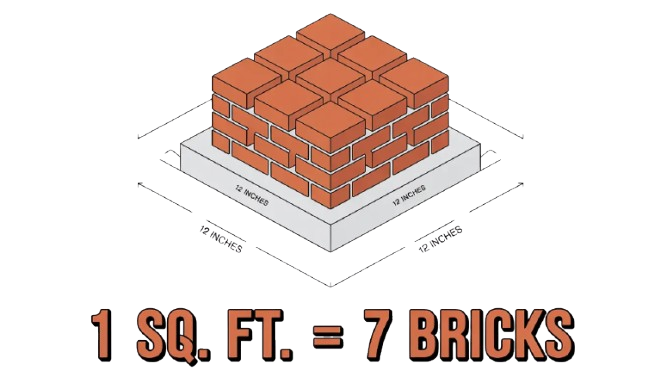
Our brick calculator uses a standard industry formula to ensure you don’t under-buy. For a standard modular brick wall with a 3/8-inch mortar joint, you need exactly 7 bricks per square foot. If you choose a different brick size, the math changes, but the logic stays the same.
The calculation works like this. First, we find the total area by multiplying the length and height. Then, we multiply that area by 7. Finally, we add a 10 percent safety buffer. This extra bit is vital because bricks often break during delivery or while you are cutting them to fit corners. For the mortar, we assume one 80lb bag covers about 30 to 35 bricks. This formula ensures you have a professional-grade estimate before you spend a single dollar at the masonry yard.
How to subtract for doors and windows
One mistake I see often is forgetting to subtract openings. If your wall has a large window or a door, you don’t want to buy bricks for that empty space. Calculate the square footage of your door (usually 21 sq ft) or window. Subtract that number from your total wall area before you enter the dimensions into the tool. This simple step can save you from buying hundreds of extra bricks.
Single Wythe vs Double Wythe Walls
In masonry terms, a “wythe” is a single vertical section of bricks.
- Single Wythe: A standard wall one brick thick. Common for garden borders.
- Double Wythe: A wall two bricks thick. It provides much better structural strength.
If you’re building a double wythe wall, simply multiply your final brick count result by two.
The Science of Mortar: Type N vs Type S
Mortar is the glue that holds your project together. For residential walls, you will usually use Type N mortar. It is flexible and perfect for most bricks. If you are building a retaining wall that holds back dirt, you might need Type S mortar for extra strength. The standard formula assumes a 3/8 inch mortar joint. An 80lb bag of pre-mixed mortar typically lays 30 to 35 standard modular bricks. For more on structural standards, see the official guide to brickwork.
Technical Guidance for 2026 Builds
- Brick Spacing: Standard USA builds use 3/8 inch mortar gaps. UK projects typically use 10mm joints.
- Mortar Mix: I recommend a 1:4 or 1:5 sand to cement ratio for standard garden or partition walls.
- Joint Volume: Remember that mortar accounts for 15 to 20 percent of your total wall volume.
- Coverage Waste: Always allow at least 5 to 10 percent extra for cuts and breakage during transport.
Brick & Mortar Quick Estimation (UK & USA)
This table provides a “Fast Look” at common wall sizes. It helps you verify the results of our brick calculator instantly.
| Wall Area | Unit Type | Standard Size | Units Needed | Mortar Volume |
| 100 sq ft | US Brick | 7 5/8″ x 2 1/4″ x 3 5/8″ | ~700 Bricks | 7.5 cu ft |
| 150 sq ft | US Block | 16″ x 8″ x 8″ | ~140 Blocks | 11.0 cu ft |
| 10 m² | UK Brick | 215 x 102.5 x 65 mm | ~600 Bricks | 0.20 m³ |
| 20 m² | UK Block | 440 x 215 x 100 mm | ~200 Blocks | 0.35 m³ |
💡 Pro Tips for a Perfect Finish
- Buy in full packs: Purchasing bricks in bulk is more cost effective than buying individual pallets.
- Consistency is key: Keep your mortar mix identical across the entire wall to avoid color patching.
- Use pointing mix: For repointing old joints, a 1:4 mix is best for durability.
🚫 Common Mistakes to Avoid
- Forgetting waste: Never order the exact number the math suggests. You will have broken bricks.
- Ignoring openings: If your wall has windows or doors, subtract that square footage from your total area before calculating.
- Wrong brick size: Ensure you choose the correct regional size in the brick calculator dropdown menu.


