
Sand Calculator: Tons, Cubic Yards & Bag Estimator
Sand Calculator
Estimate sand for pavers, pools, or sandboxes
Whether you are leveling the ground for an above ground pool or laying a professional paver patio, getting the sand volume right is critical. This sand calculator provides instant estimates for cubic yards, total tons, and individual bag counts. In 2026, bulk sand typically costs between $25 and $55 per ton. Bags at the local hardware store run about $5 per 50lb bag. Using this tool ensures you have a perfectly level base without paying for a half empty delivery truck. It is the fastest way to budget your materials and your time.
How to use this sand calculator
- Measure the area: Enter the length and width of your project space in feet.
- Set the depth: Standard paver bases require 1 inch of sand. Playground sandboxes usually need 6 to 12 inches for safety.
- Choose your units: The tool provides results in cubic yards for bulk orders and tons for weight limits.
- Calculate: The estimate includes a 10 percent buffer. This accounts for compaction since sand packs down when you walk on it or wet it down.
The Sand Weight Formula
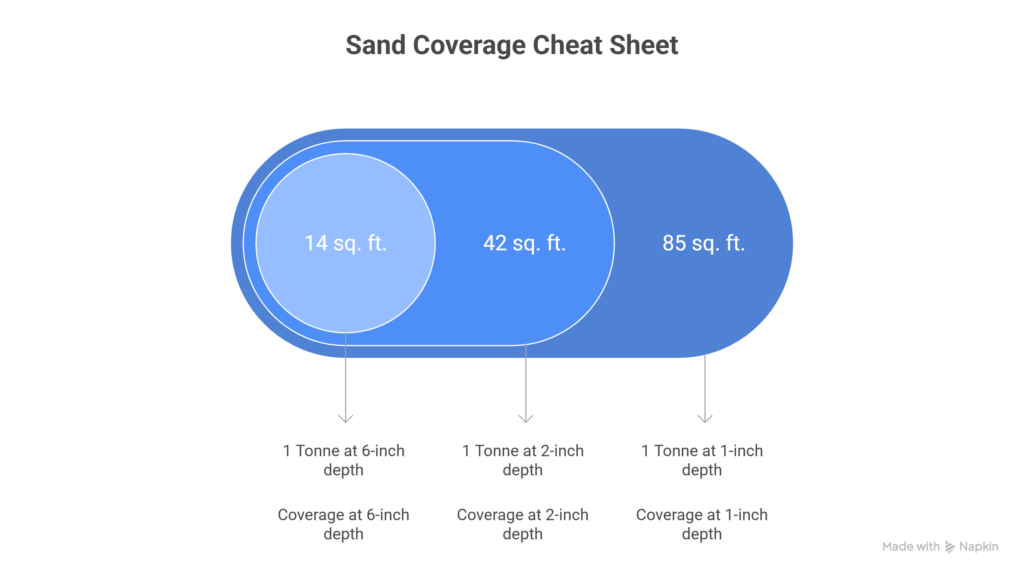
Our sand calculator uses a weight to volume conversion because most bulk suppliers sell by the ton. First, we find the cubic footage by multiplying length, width, and depth. Then we convert that to yards by dividing by 27. Finally, we multiply by the industry density of 1.35 tons per cubic yard.
It is important to remember that wet sand weighs much more than dry sand. If you are picking up bags in a small truck or trailer, always check your vehicle weight limit. A single cubic yard of dry sand weighs nearly 2,700 pounds. That is more than most light duty pickup trucks can safely carry in one trip. Knowing these numbers keeps your equipment safe and your project on track. This is also helpful when ordering masonry sand for mortar; you can find your total bag count using our Brick Calculator.
Why Compaction Matters
When you pour sand, it is fluffy because of the air between the grains. As soon as you run a plate compactor over it or spray it with water, it shrinks. I see many beginners skip the 10 percent buffer and end up with a dip in their patio. Always order a little more than you think you need. A perfectly level sand bed is the only way to ensure your pavers don’t shift or sink next year.


