
Wallpaper Roll Calculator
Wallpaper Calculator
Estimate rolls for your feature wall
Adding a feature wall with bold wallpaper is one of the fastest ways to transform a room. But let’s be real, nothing is more frustrating than being half a roll short when you reach the final corner of the room. This wallpaper calculator is designed to take the guesswork out of your project. In 2026, designer wallpaper rolls typically cost between $30 and $150 each. Using this tool ensures you buy enough to match your patterns perfectly without wasting money on rolls you will never open.
How to use this wallpaper calculator
Measure Wall Width: Enter the total length of the wall(s) you are covering in feet.
Measure Wall Height: Standard walls are 8 or 9 feet, but be sure to measure to the top of the baseboard.
Select Roll Type: Choose between a “Standard Single Roll” (approx. 30 sq ft) or a “European Double Roll” (approx. 56 sq ft).
Calculate: The tool automatically adds a 15% waste buffer, which is essential for pattern matching.
The Wallpaper Math Formula
This wallpaper calculator uses a specific formula to account for the “Repeat” in the pattern:
- Wall Area: (Width in Ft x Height in Ft) = Total Sq Ft.
- Pattern Buffer: Total Sq Ft x 1.15 (15% extra for alignment).
- Roll Count: Total Area with Buffer / Square Footage per Roll.
We always round up to the nearest whole roll. Wallpaper is manufactured in “Dye Lots,” meaning the colors can vary slightly between different printing batches. If you run out and buy another roll a month later, the colors might not match perfectly. It is always safer to have one extra roll from the same dye lot.
Why the 15% Pattern Waste is Necessary
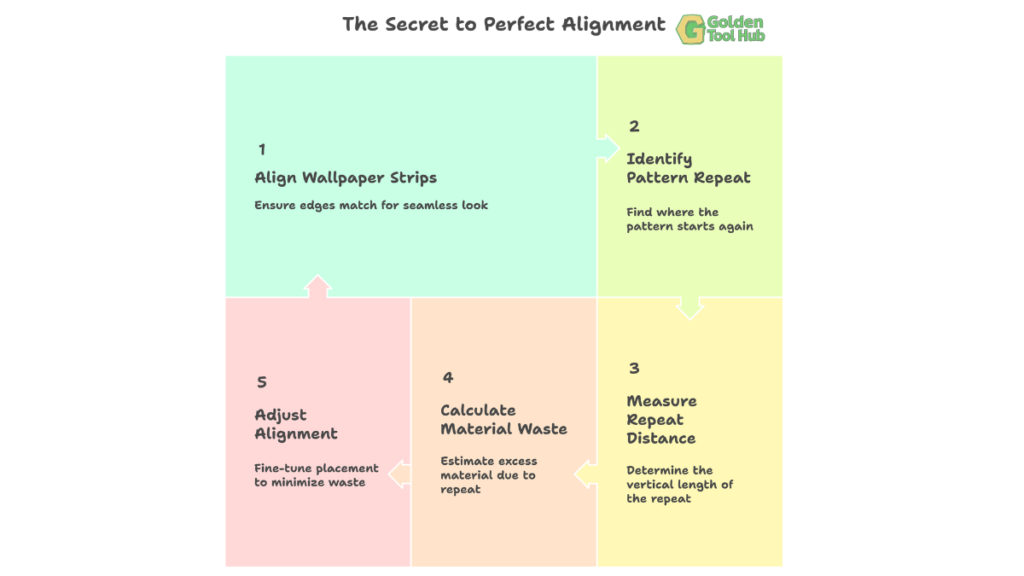
Unlike paint, wallpaper has a “repeat.” This is the distance between where the pattern starts and where it begins again. When you hang the second strip, you have to slide it up or down to align the flowers or geometric shapes with the first strip. This process creates wasted paper at the top and bottom. Our wallpaper calculator builds this 15% waste directly into your estimate so you don’t have to do the stressful math yourself.


